LLC39: War Ecologies
About
The "War Ecologies" collective will come together to collaborate—to think, read, and write together—to anthropologically examine war's ecological entanglements and reverberations across heterogeneous worlds.
Active since: 2023
Closed Group of Collaborators
- Syracuse University
- Cornell University
- University of Rochester
- Rochester Institute of Technology
Collaborative Goals
Most of the literature on wars and postwar societies understandably focuses on the immediate, horrifying aspects of warfare—killing and deaths, the destruction of infrastructures, displacement and trauma. Our working group—composed of five faculty members from Syracuse University, Cornell University, the University of Rochester, and the Rochester Institute of Technology—aims to broaden and deepen this focus by attending to wars and post-war ecologies. We come together to examine "forms of war that are often unrecognized as such—in everyday experiences, material effects, and affective resonances of violence that have penetrated and contaminated the environments and ecologies of places…" (Guarasci and Kim 2022). Our working group comparatively and collaboratively explores post/war ecologies in Rwanda, Kashmir, Bosnia, Nigeria and Kuwait—places where we conduct research—to examine war's ecological entanglements and reverberations across heterogenous worlds and worldings. Our attention to the continuous, active processes of experiencing, creating, and shaping ecologies of war, prompts us to question how and in what ways experiences of war and postwar capitalism, environmentalism, and biomedical hegemony reverberate across injured beings and things of postwar landscapes. What can we learn about war and postwar societies by paying attention to human relations with various non-human others—species, spirits, toxins, geologies, and infrastructures—that collectively reshape societies and landscapes? What do war and postwar ecologies tell us about power, ontologies and epistemologies as we explore our connections across borders and continents? And how does ecology emerge as a new repository of both capture (of bodies, life projects, health, energy, labor, and futures) and political imagination (hope, desire, health and citizenship)? We examine these questions, and think, read, and write together to offer new approaches to some of the most pressing questions of our time.
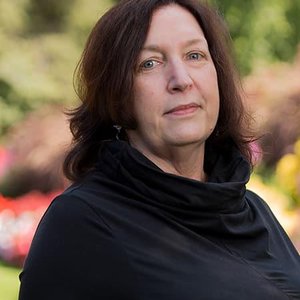
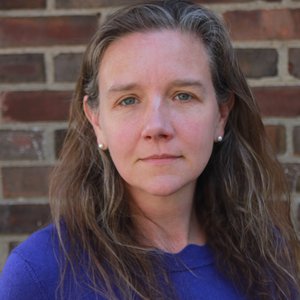
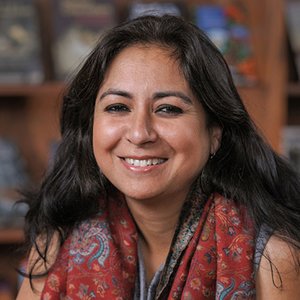
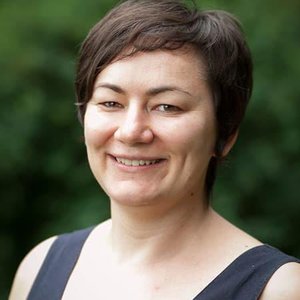
Group Organizers

Activities
Wars and War Ecologies of the Middle East
Oct. 23, 2026, noon
War Ecologies Writing Workshop
May 13, 2026, 1 p.m.
Threats to Power: Methane Extraction in Rwanda
April 9, 2026, noon
Group Outcomes
Azra Hromadžic's "Riverine Citizenship: A Bosnian City in Love with the River"
Amsterdam University Press, 2024