By the Numbers
Envisioned nearly 20 years ago to inspire and support innovative collaborative research, teaching, and programming in the humanities, this dynamic research consortium links 11 universities and colleges across the region, and far beyond the geographical boundaries of Central New York.
Tangible Working Group outcomes are added to Working Group pages, and Corridor-supported publications (directly or indirectly) are now being compiled on our Publications page.
During the 2025-26 academic year
- Over $356k in Corridor funding directly supported faculty research and collaboration across all 11 participating campuses.
- 80% of those funds went directly to 57 Working Groups hosting more than 150 activities across our region. This investment represents a 15.8% increase over last year while seed grants have increased 27% over the last 4 years.
- Those Working Groups are led by the efforts of 225 faculty/staff Organizers.
- Working Groups engaged more than 3,700 people involving participants from over 115 colleges, universities, K-12 schools, religious organizations, non-profits, publishers, booksellers, museums from at least 25 U.S. states and over 17 countries around the globe.
What are our Working Groups telling us?
- Scholarly community-building is the Corridor’s foundational value.
- Cross-institutional mentorship for graduate students/junior faculty and peer-to-peer mentoring is hugely beneficial, widespread, and seemingly underreported. People are describing stories of mentorship but aren’t given themselves credit for doing this important work.
- Interdisciplinarity (including with the sciences) often lead to more energized events and unexpected research directions.
- Regular, sustained, workshop-style feedback on works-in-progress involves commitment, represents a practice, and is more impactful than one-off events.
- Invited speakers often become part of the working group’s community of scholars, not just one-time visitors.
- Artificial intelligence is a concern and conundrum across many groups, especially concerning pedagogy and the erosion of humanities methodologies and critical thinking skills.
- Public humanities and community engagement lead to fulfilling outcomes but face significant structural constraints, including tenure and promotion guidelines that don’t recognize this kind of work.
- Institutional pressures (such as T&P guidelines, departmental budget cuts, and increased administrative burdens) are leading some working groups to pause their collaborative work.
Programming to Bolster Faculty Research
- We hosted 91 participants at Corridor writing retreats providing time, strategies, and scholarly community for the participants. Our annual fall retreat in October hosted first-time participants, and we held an in-person retreat for previous participants in July 2025 and an online version in January.
- The workshop, Translating your Humanities Scholarship to Expand Reach and Recognition, was a partnership with the new Center for Humanities Communication to bring Anke Finger (University of Connecticut) in conversation with Kath Burton (Radically Hopeful) in December. This session aimed to teach humanities faculty to better communicate their research by moving beyond institutional metrics to tell a compelling story about why the work matters.
- Author, historian, and former journalist, John Ghazvinian, presented “Scholars to Storytellers: An Introduction to Trade Publishing” in February. This workshop walked humanities faculty through the basics of commercial vs. academic publishing, helping scholars understand the pros, cons, and pathway to reaching a wider audience with their work.
By the Numbers
We continue to see a robust spread of activities across our 11 institutions. Notably over the past year, we saw a notable increase in participation rates from some of the smaller institutions in our consortium.
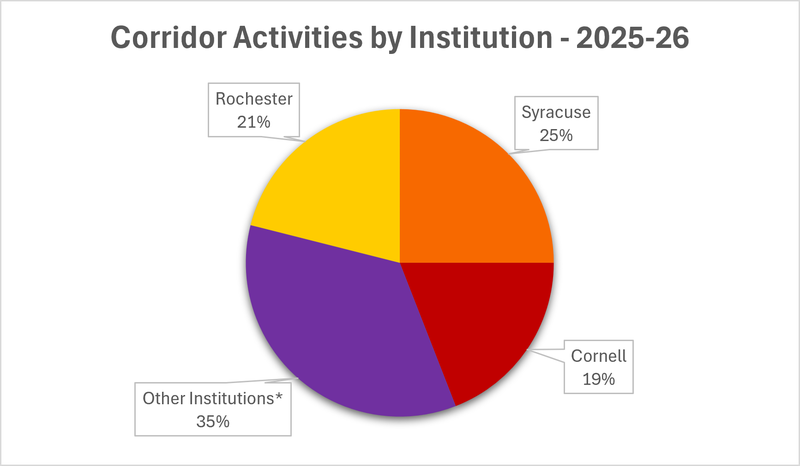
* Other institutions are Colgate, Hamilton, HWS, Le Moyne, RIT, Skidmore, St. Lawrence, and Union.
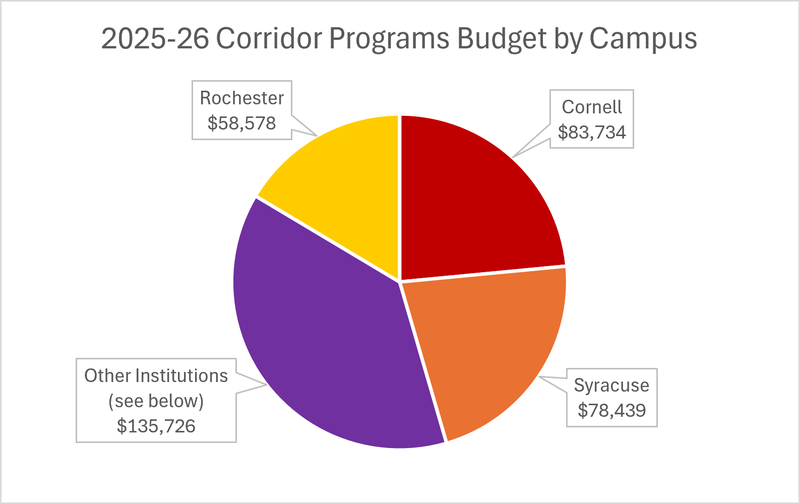
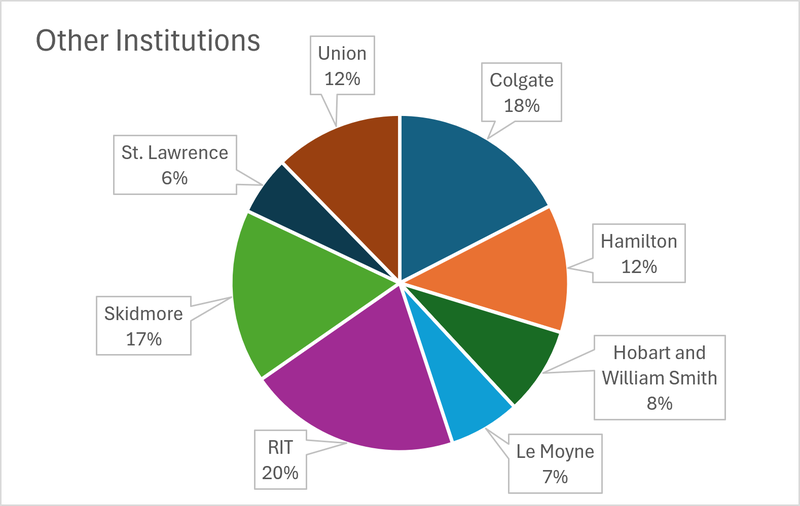
The Corridor's programs budget (including Working Group awards and research support workshops and retreats) benefits scholars across all of our campuses, aligning roughly by size of the institution.
Funding History over Time
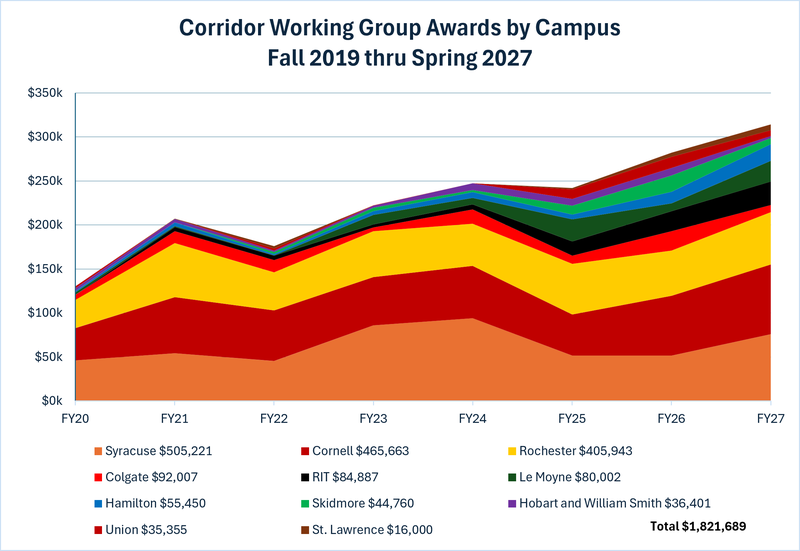
The Corridor has funded Working Groups at an increasing rate over time, and we continue to see strong interest each year during our Call for Proposal periods.
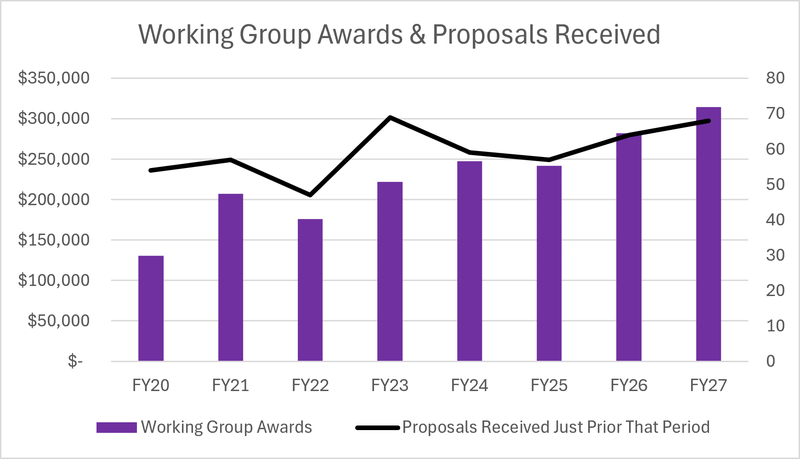
Since Fall 2019, the Corridor has awarded more than $1.8 million in funding to our collaborative Working Groups supporting humanities research.