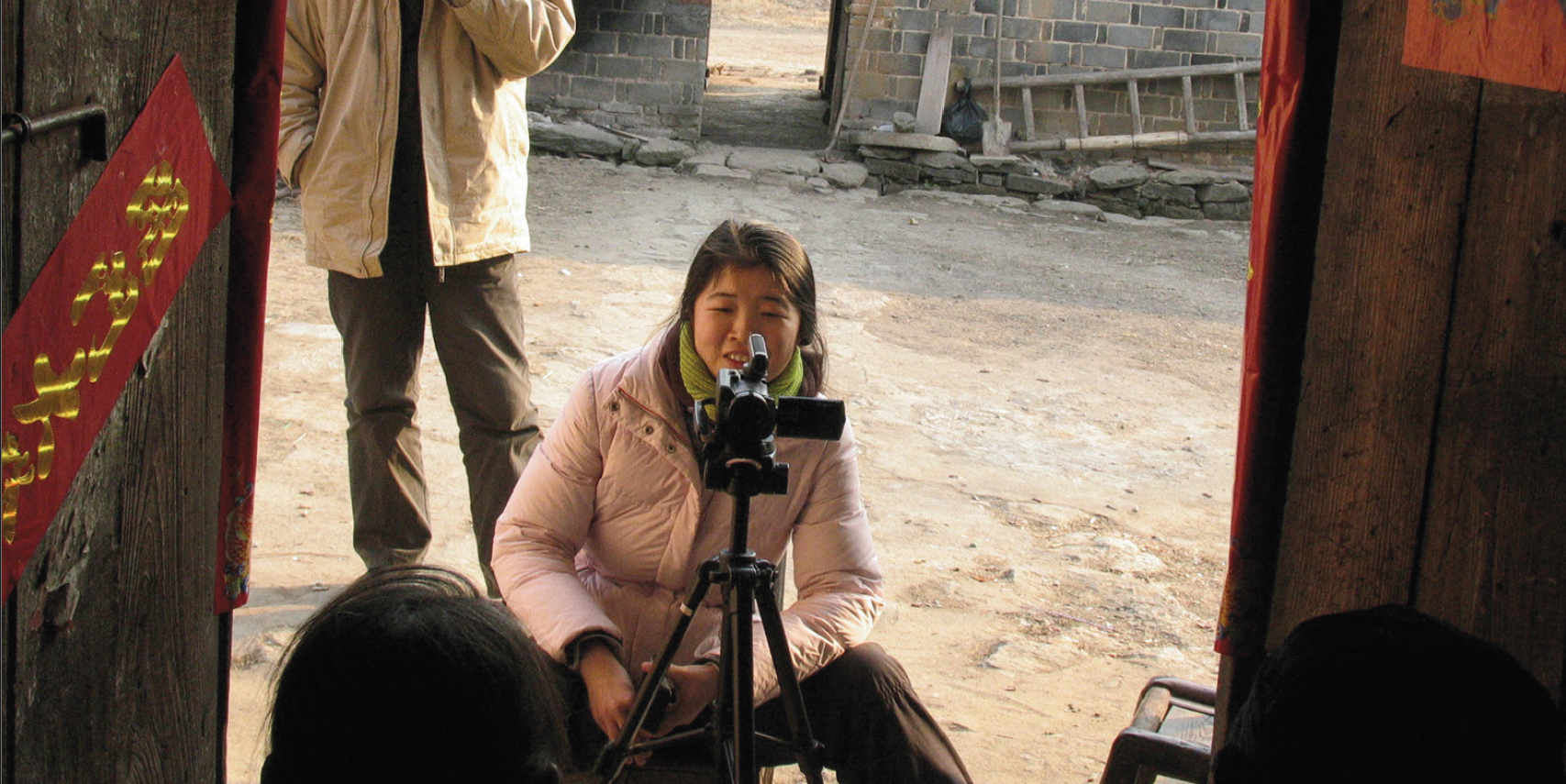

SARATOGA SPRINGS — Scenes of deadly demonstrations, dog fights, and collapsed schools provided glimpses of social problems in post-Mao China that underground filmmakers hoped to spotlight.
The images were presented by Paul Pickowicz—a professor of history and Chinese studies at the University of California, San Diego—at Skidmore College on Monday night as part of a lecture designed to “challenge the assumption that all early 21st-century Chinese films were government-produced.”
Pickowicz certainly achieved his objective, showing a wide array of excerpts from independent films produced by non-state filmmakers that explored themes of identity, migration, and protest. Many of these filmmakers aimed to expose government wrongdoing and push back against state-sanctioned narratives.
“In 1953, shortly after the revolution, the Mao state nationalized all filmmaking,” Pickowicz explained in his lecture. “No more private sector filmmaking was allowed after 1953. All films were made by the state, and so only the voice of the state could be heard. That went on for multiple decades. But with the post-Mao reforms, something called independent, non-state films could be made… This began around 1990 and it peaked in the early 2000s… I think it was the high point of this particular moment in the history of Chinese filmmaking. Lots of very remarkable stuff was made.”
Among the topics explored in the films were the 1989 Tiananmen Square protests (known in China simply as “June 4th”), the Sichuan schools corruption scandal, child trafficking, and extreme academic pressure.
Although filmmakers were successful in creating these movies, their work doesn’t exist on official websites or streaming services in China, Pickowicz said. It’s been the task of younger, tech-savvy cinephiles to upload the films to the hidden corners of the internet.
Today, independent Chinese filmmakers still face many obstacles. Last month, according to an NPR report, a New York-based film festival that showcased Chinese filmmakers was abruptly canceled. The festival’s organizer blamed the Chinese government, saying it pressured participating filmmakers to back out of the festival.
But at Skidmore, independent Chinese protest films could be viewed by anyone curious enough to drop by Palamountain Hall.
Pickowicz’s lecture was sponsored by the Central Humanities New York Corridor, as well as Skidmore’s History Department and The Frances Young Tang ‘61 Program in Asian Studies. Like many Skidmore events, it was free and open to the public.
Read the original article in Saratoga Today.
This article refers to the Working Group, HS12: China in the World, Past and Present.